
Kaya Nishiyama - Hochschule für angewandte Wissenschaft Hamburg
Windows – Hochschule für angewandte Wissenschaft Hamburg
My passion is to create graphical and experimental patterns. I aim to tell stories
about intimacy and social issues through my designs. What interests me most
about fashion is what we choose to show of our naked body, when and how we
choose to show it, and when we cover, envelop, or decorate it. In this context, the
conscious perception from the outside as part of self-presentation is an essential
element.
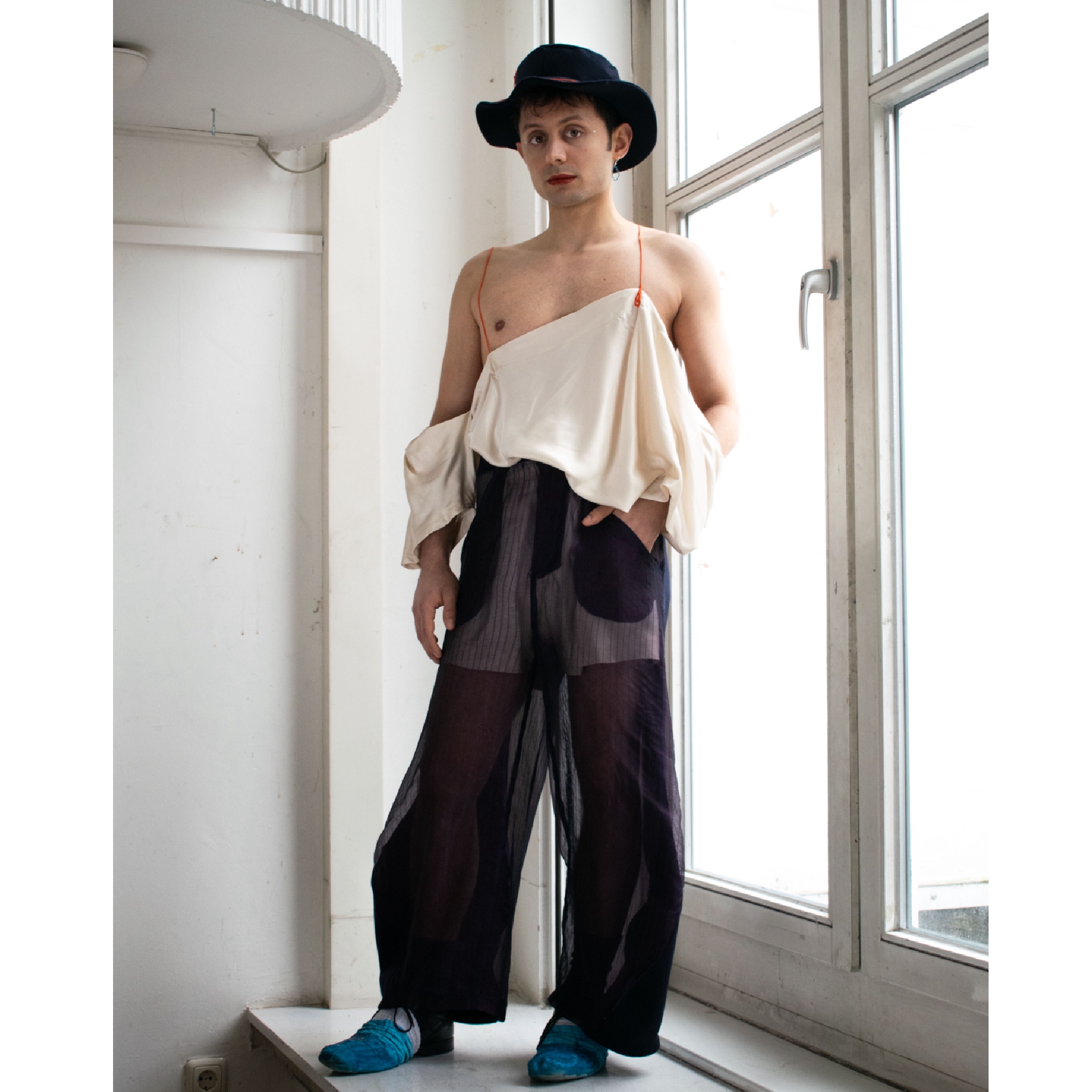
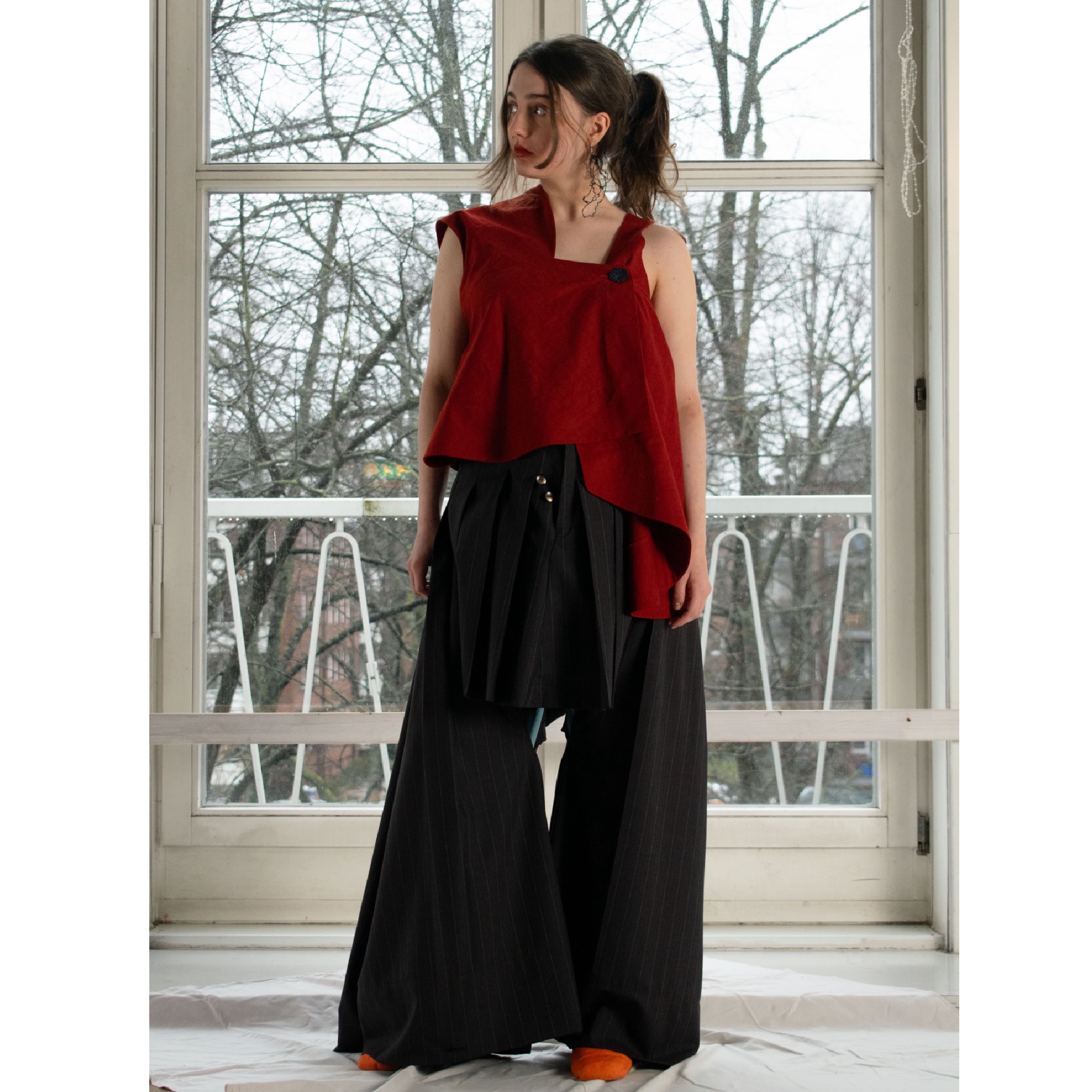
My bachelor collection “Windows” explores the tension between the intimacy of
interior space and the publicity of exterior space. It is inspired by Virginia Woolf’s A
Room of One’s Own as well as the diary of a Japanese court lady (around 900 CE)
titled The Pillow Book of Lady Sei Shōnagon.
The window is a transparent membrane that enables a connection from the inner
space to the outside world. It allows a glimpse into an individual’s private sphere
from the outside and a view into the public sphere from the inside. In media, the
window often serves as a symbol of seeing and being seen, as well as other
ambivalent states and situations. One’s own space provides protection and the
freedom to be creative. In her essay, Virginia Woolf concludes that people need a
room of their own and five hundred pounds a year in order to produce literature.
This necessary space was unavailable to women throughout history for a long
time.
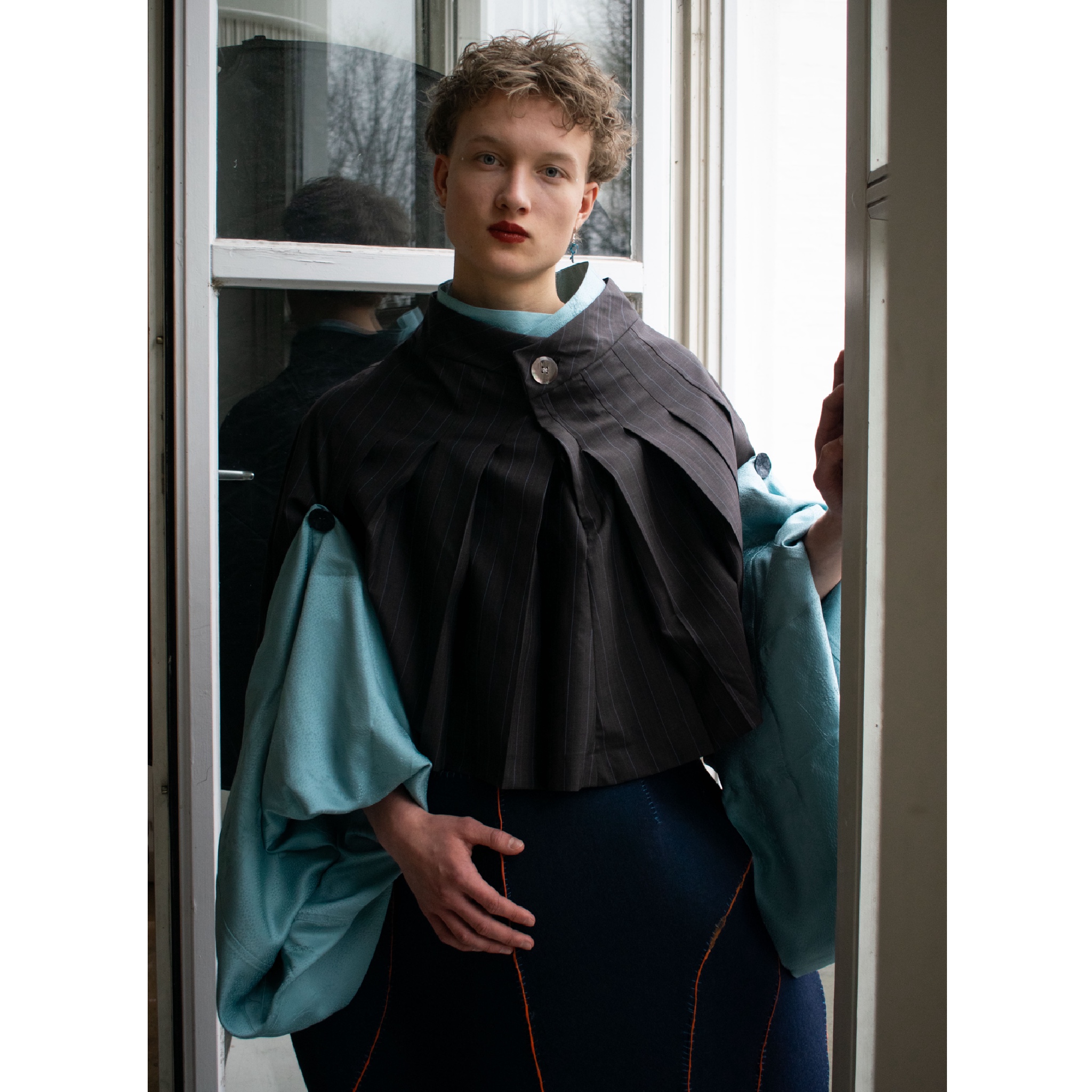
A window can be single-, double-, or triple-glazed. These layers reminded me of
the Junihitoe, the “twelve-layer kimono” worn particularly by court ladies during
Japan’s Heian period (ca. 794–1192 CE). Due to its many layers and large volume,
the kimono functions like a space of its own, simultaneously offering protection
and a lack of freedom of movement for the court ladies. In The Pillow Book, many
observations of intimate court life as well as natural phenomena and seasons are
described and poetically embellished.
Virginia Woolf’s work A Room of One’s Own, written in the early 20th century, led
me to the fashion style of that same period. I studied jacket patterns and hats from
this era and translated them into intimate, partly transparent garments. The pieces
are intended to express both vulnerability and, at times, strength and self-assertion
—the ability to claim one’s own space, for example through a rounded shape in the
sleeve at the upper arm.
The Pillow Book and the Junihitoe inspired me to create multilayered designs that
can be removed layer by layer. The act of observing and being observed has been
translated into faces cast in latex. The viewers of the garments are looked back at
and see themselves like in a mirror.
Hats and shoes are accessories that are only worn outdoors. They stand in
contrast to the intimate designs and express the questions: What do I reveal of my
body? Which garment represents me? And how do I deal with the awareness of
being seen in public? And ultimately: Which intimacy do I carry from the interior
space into the outer world? My collection is a play with exactly these questions
and their ambivalences.
Credits
photographer:
Fam-Catherine Löber @fam.catherine
photo assistent:
Lena Mecking
models:
Annelie Barbieri @annelie_barbieri_
Arnas Grijsen @arnas.grijsen
Armir Salihu
Lia Zamora @lia.zam
Styling and H&M by me